
Pomeranian Weight Chart & Growth Guide
Updated · By the PetNoter team
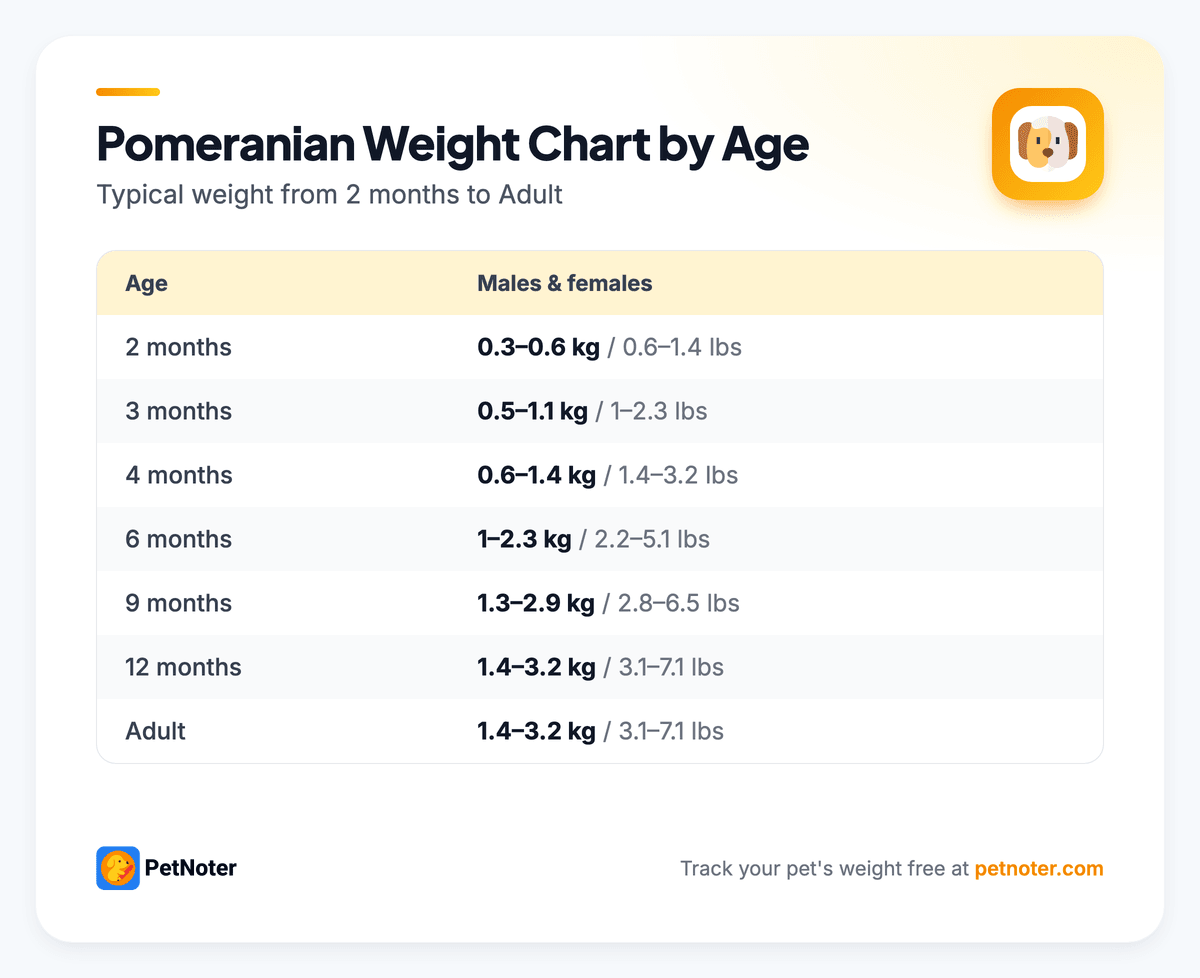
Adult Pomeranians typically weigh 1.4–3.2 kg (3.1–7.1 lbs). Male and female Pomeranians are close in size, so one range covers both. The coat can make a Pom look twice its real size, so judge condition with your hands and a scale. Most Pomeranians reach their full adult size by 10–12 months.
Typical weight at each age for a Pomeranian, from a two-month-old puppy to a fully grown adult — and why grams matter on a dog this small.

Track your Pomeranian's weight in the free PetNoter app
4.5 · Free · Android & iOS
Pomeranian Weight Chart by Age
Adult Pomeranians typically weigh 1.4–3.2 kg (3.1–7.1 lbs). The American Kennel Club standard describes 3 to 7 lbs. Males and females overlap almost completely, so a single range covers both, and the spread mostly reflects frame size.
| Age | Weight |
|---|---|
| 2 months | 0.3–0.6 kg (0.6–1.4 lbs) |
| 3 months | 0.5–1.1 kg (1–2.3 lbs) |
| 4 months | 0.6–1.4 kg (1.4–3.2 lbs) |
| 6 months | 1–2.3 kg (2.2–5.1 lbs) |
| 9 months | 1.3–2.9 kg (2.8–6.5 lbs) |
| 12 months | 1.4–3.2 kg (3.1–7.1 lbs) |
| Adult | 1.4–3.2 kg (3.1–7.1 lbs) |
Puppy ages are estimates, worked out from the breed's published adult weight and a typical growth curve for toy breeds, not from a measured age-by-age study. Use them as a guide and watch your own dog's trend.
Is your Pomeranian a healthy weight?
Enter your Pomeranian's age and current weight to compare it against the range in the chart above.
Compare Pomeranians against other breeds in the dog weight calculator →
These ranges are typical values for the breed, not a diagnosis. Individual healthy weight depends on frame, build and health history — ask your vet about your own pet.
You know the numbers. Now watch the trend.
A single weigh-in tells you very little — a chart of the last six months tells you everything. PetNoter keeps your Pomeranian's weight history in one place, free.
- Log a weigh-in in seconds and see the trend line
- Reminders for weigh-ins, vaccinations and vet visits
- Vet records, prescriptions and photos stored per pet
4.5 average rating · no account needed to start
About the Pomeranian
The Pomeranian is a true miniature: a spitz descended from much larger northern working dogs and bred down in size, helped along by Queen Victoria's enthusiasm for small Poms in the 19th century. It kept the spitz outlook, and is bold, alert and vocal for a dog that fits in a handbag.
The dense double coat makes visual weight checks nearly useless. A Pom can look round while being underweight, or look fine while carrying too much. Feel through the coat for the ribs and spine, and rely on the scale for the rest.
At this size, small changes count. A 300 g gain on a 2 kg dog is 15% of body weight. Extra weight adds strain to knees prone to patellar luxation and to an airway at risk of tracheal collapse, and very small puppies can be vulnerable to low blood sugar if they miss meals.
Growth Milestones and Healthy Weight
- Growth is front-loaded: expect a Pomeranian to be close to three-quarters of its adult weight by six months and essentially finished between 10 and 12 months.
- The puppy coat usually sheds between about four and eight months, so a Pom can look thinner for a while without having lost any weight.
- Weigh weekly as a puppy and monthly as an adult, using a scale that reads to at least 10–20 g. Bathroom scales are not accurate enough at this size.
- Feed small puppies little and often, and call your vet promptly if a young puppy becomes weak, wobbly or stops eating.
- Measure food on a kitchen scale, and keep treats under 10% of daily calories. One biscuit made for a larger dog can be a large share of a Pom's day.
- Use a harness rather than a collar on walks to avoid pressure on the windpipe.
- Keep up with dental care. Sore teeth are common in toy breeds and can cause weight loss that looks unexplained.
Want to know why your Pomeranian weighs what it does?
PetNoter AI reads your Pomeranian's weight history, age and notes, answers your questions about food, weight and health, and tells you how urgent it is.
Free to download · AI with PetNoter Pro · How PetNoter AI works

Bruno
PetNoter AI
How much and how often should Bruno eat?
PetNoter AI's suggestion
No urgent concern
Nothing here needs a vet right now.
Bruno weighed 21 kg at his last check on 2026-02-21. That's on the leaner side for an adult male Doberman, so ask your vet to check his body condition and set a daily calorie target.
Not a vet. In an emergency, contact a vet right away.
Frequently Asked Questions
Sources and further reading
Check these figures against the references below. Every pet is different, so ask your vet what is right for yours.
- American Kennel Club: dog breeds — Breed standards, including typical adult height and weight
- FCI: breed nomenclature — Official standards for every FCI-recognised breed
- The Royal Kennel Club: breed standards — UK breed standards
- WSAVA Global Nutrition Guidelines — Body condition scoring charts for dogs and cats
Next steps for your Pomeranian
Track your Pomeranian's weight in the free PetNoter app
4.5 · Free · Android & iOS