
German Shepherd Weight Chart & Growth Guide
Everything you need to know about monitoring your German Shepherd's weight and growth — from puppy to full adult.

Track your German Shepherd's weight in the free PetNoter app
4.5 · Free · Android & iOS
Normal Weight Range for German Shepherds
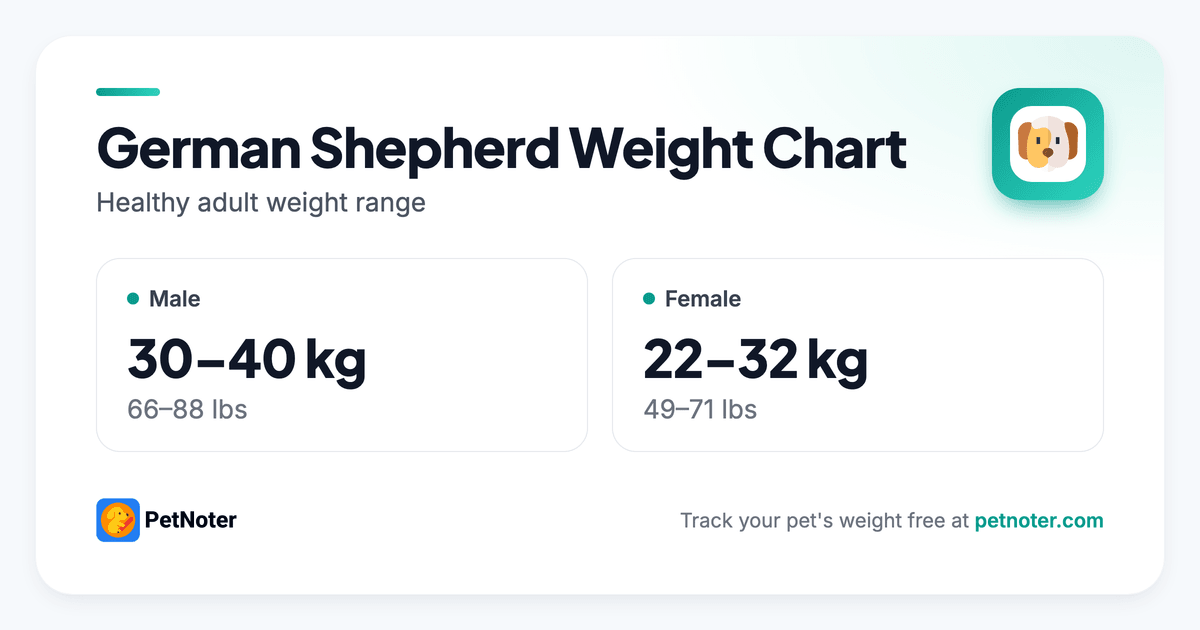
Adult male German Shepherds typically weigh 30–40 kg (66–88 lbs) and females 22–32 kg (49–71 lbs). Most reach their adult height by 12–18 months but keep filling out with muscle until around 2 years old. Genetics, diet and activity level all affect where an individual dog lands in the range.
German Shepherd Weight Chart by Age
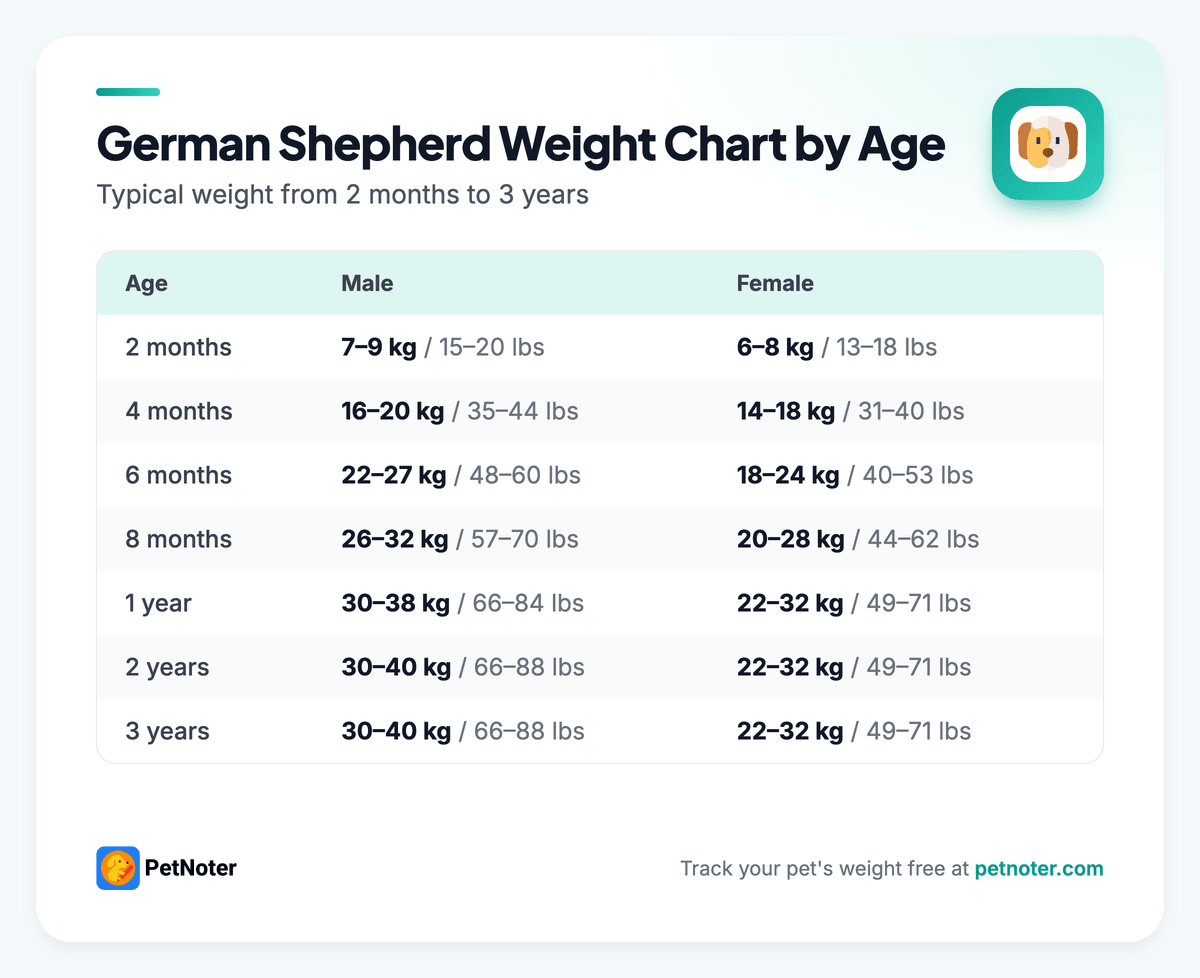
The weight of a German Shepherd varies based on age, gender, and genetics. Below is a detailed chart showing the typical weight ranges for male and female German Shepherds from puppyhood to adulthood.
Male German Shepherd
| Age | Weight |
|---|---|
| 2 months | 7–9 kg (15–20 lbs) |
| 4 months | 16–20 kg (35–44 lbs) |
| 6 months | 22–27 kg (48–60 lbs) |
| 8 months | 26–32 kg (57–70 lbs) |
| 1 year | 30–38 kg (66–84 lbs) |
| 2 years | 30–40 kg (66–88 lbs) |
| 3 years | 30–40 kg (66–88 lbs) |
Female German Shepherd
| Age | Weight |
|---|---|
| 2 months | 6–8 kg (13–18 lbs) |
| 4 months | 14–18 kg (31–40 lbs) |
| 6 months | 18–24 kg (40–53 lbs) |
| 8 months | 20–28 kg (44–62 lbs) |
| 1 year | 22–32 kg (49–71 lbs) |
| 2 years | 22–32 kg (49–71 lbs) |
| 3 years | 22–32 kg (49–71 lbs) |
Is your German Shepherd a healthy weight?
Enter your German Shepherd's age and current weight to compare it against the range in the chart above.
Compare German Shepherds against other breeds in the dog weight calculator →
These ranges are typical values for the breed, not a diagnosis. Individual healthy weight depends on frame, build and health history — ask your vet about your own pet.
You know the numbers. Now watch the trend.
A single weigh-in tells you very little — a chart of the last six months tells you everything. PetNoter keeps your German Shepherd's weight history in one place, free.
- Log a weigh-in in seconds and see the trend line
- Reminders for weigh-ins, vaccinations and vet visits
- Vet records, prescriptions and photos stored per pet
4.5 average rating · no account needed to start
About the German Shepherd
Let me tell you about German Shepherds - they're just amazing dogs! You know how some dogs are just naturally good at everything? That's a German Shepherd for you. They're these incredibly smart and loyal pups that came from Germany way back in the 1800s.
Originally, they were the ultimate sheep herders, but these dogs are so talented that people quickly realized they could do so much more. Now you see them as police dogs, helping find missing people, and even helping folks with disabilities. They're like the overachievers of the dog world, but in the best possible way!
If you've ever seen a German Shepherd, you'll know they're those handsome dogs with the pointed ears and that proud look - kind of like they know how cool they are! But don't let that dignified appearance fool you - these dogs are total softies with their families. They're like big, furry bodyguards who also want to cuddle on the couch.
They make fantastic family dogs too. Once they're part of your family, they're all in - super protective and amazing with kids. Just keep in mind that these pups have a lot of energy to burn! They're not really couch potato types - they need plenty of exercise and fun activities to keep their smart minds busy. It's like having a furry best friend who's always up for an adventure!
That's probably why so many people around the world love them - they're just incredible all-rounders. Whether you want a running buddy, a loyal friend, or a protective family dog, German Shepherds are always ready to step up to the job!
Tips for Maintaining a Healthy Weight
- Keep puppies lean. Fast growth and extra weight put strain on developing hips and elbows, and German Shepherds are prone to hip and elbow dysplasia.
- Feed a large-breed puppy food and don't add calcium supplements unless your vet recommends them.
- Adults need 1–2 hours of exercise a day, including mental work like training or scent games.
- Split food into two or more meals and avoid hard exercise right after eating to lower the risk of bloat (GDV).
- You should be able to feel (but not easily see) your dog's ribs.
- Weigh monthly and log results, so slow weight gain shows up before it affects their joints.
Want to know why your German Shepherd weighs what it does?
PetNoter AI reads your German Shepherd's weight history, age and notes, answers your questions about food, weight and health, and tells you how urgent it is.
Free to download · AI with PetNoter Pro · How PetNoter AI works

Bruno
PetNoter AI
How much and how often should Bruno eat?
PetNoter AI's suggestion
No urgent concern
Nothing here needs a vet right now.
Bruno weighed 21 kg at his last check on 2026-02-21. That's on the leaner side for an adult male Doberman, so ask your vet to check his body condition and set a daily calorie target.
Not a vet. In an emergency, contact a vet right away.
Frequently Asked Questions
Next steps for your German Shepherd
Track your German Shepherd's weight in the free PetNoter app
4.5 · Free · Android & iOS