
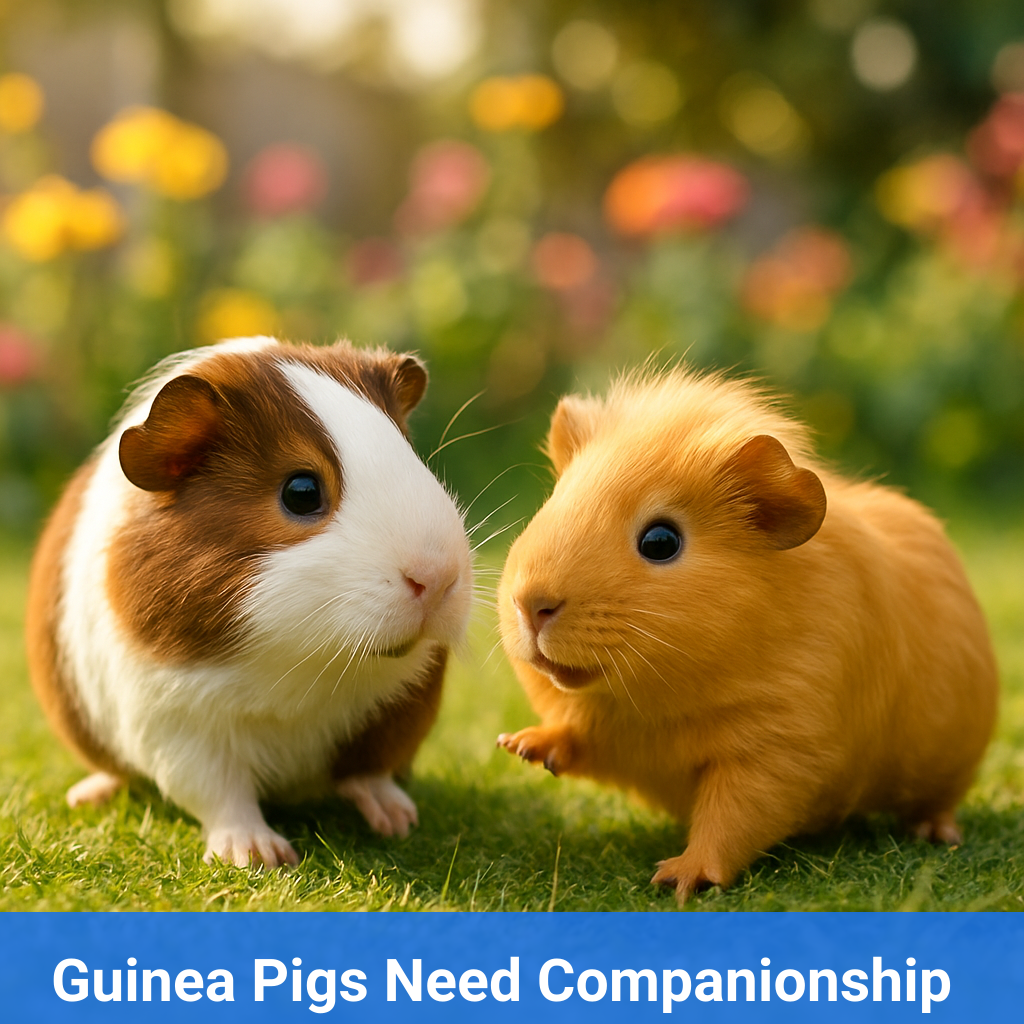
Guinea pig Social Needs & Companionship
Guinea pigs are deeply social animals, and their emotional wellbeing depends significantly on companionship. In the wild, they live in herds of up to 10 individuals, communicating constantly through chirps, squeaks, and physical contact. A solitary guinea pig can experience stress, depression, and behavioural problems—so keeping them alone isn't ideal, even with plenty of human interaction.
The best approach is to house guinea pigs in pairs or small groups, provided they're introduced gradually and compatibly matched. Same-sex pairs work well, particularly littermates or guinea pigs introduced young. If group housing isn't possible, daily interaction with you becomes essential—at least an hour of handling, floor time, and socialisation. They'll enjoy exploring with you, sitting on your lap, and hearing your voice during their active evening hours.
Regular social time also helps you spot health issues early. When you spend time with your guinea pigs daily, you'll notice changes in appetite, activity level, or temperament that might signal a problem. Pay attention to their vocalisations too—confident, chatty guinea pigs are typically happy guinea pigs.