
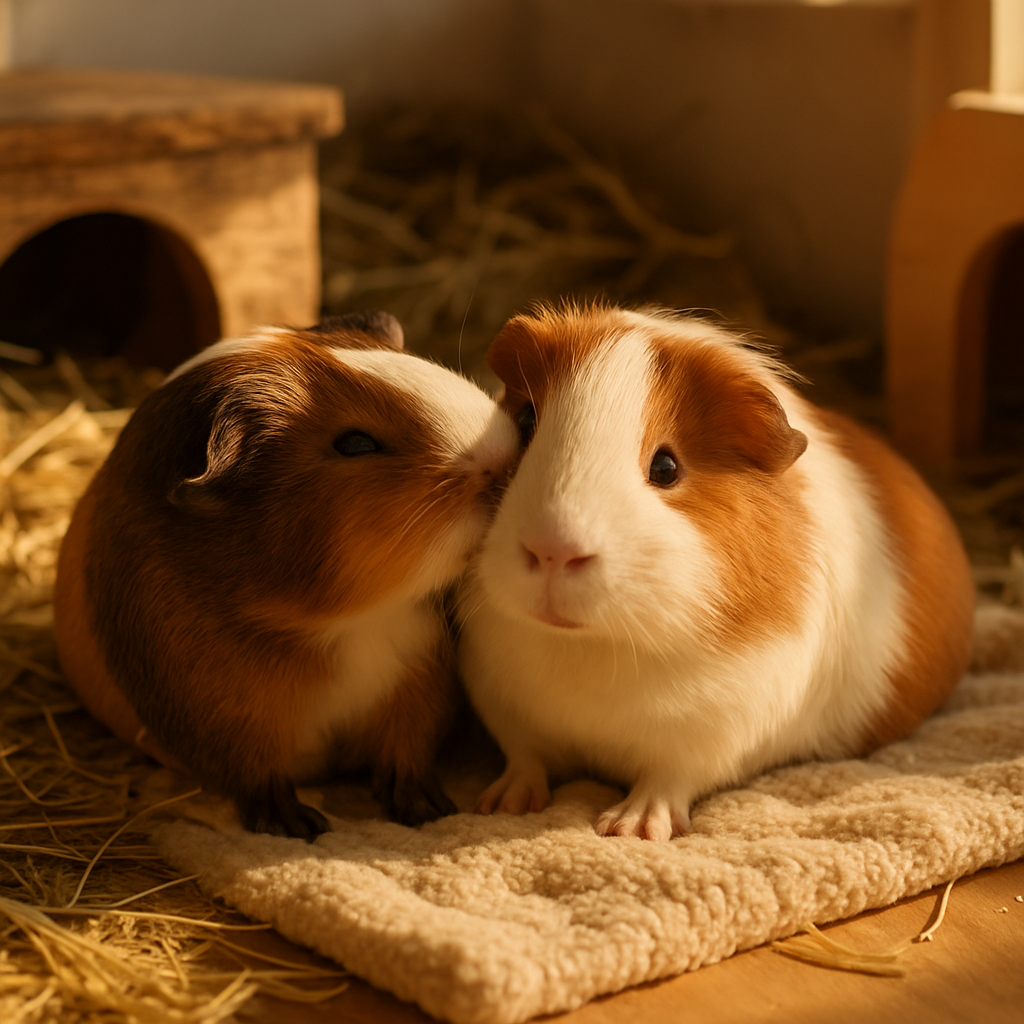
Guinea pig Social Needs & Companionship
Guinea pigs are highly social animals, and their emotional wellbeing depends significantly on companionship. Understanding your options for meeting this need is essential for responsible ownership.
Paired Housing involves keeping two or more guinea pigs together in the same enclosure. When guinea pigs are properly introduced and compatible, they provide mutual companionship, engage in social behaviours like grooming and play, and experience reduced stress and anxiety. The primary consideration is space: paired guinea pigs require a larger enclosure (minimum 180cm length) to prevent territorial disputes and ensure each animal can retreat when needed. Compatibility matters too—same-sex pairings, particularly females, tend to work well, though introductions must be gradual and carefully monitored.
Single Housing with Human Interaction means keeping one guinea pig and providing daily, dedicated interaction yourself. This approach suits owners with limited space and can work well if you commit to 1–2 hours of daily handling, floor time, or supervised interaction. Your guinea pig will bond closely with you and won't face the risk of incompatibility issues with another animal. However, this requires genuine time investment and awareness that human interaction, whilst enriching, cannot fully replicate the natural social dynamics guinea pigs experience with their own kind. Single guinea pigs may show signs of loneliness: reduced activity, disinterest in food, or excessive vocalisations.
The evidence is clear: paired or group housing is generally preferable for guinea pig welfare when space and compatibility allow. If housing your guinea pig alone, supplementing with consistent human contact and environmental enrichment becomes your responsibility.